



Nazım's Story in Digital Form
The new project of Boğaziçi University’s Nâzım Hikmet Culture and Art Research Center, the website “The Story of Nâzım,” has been launched. Written, visual, and audio documents, analyses, and informational texts about the poet are now accessible online to all readers.
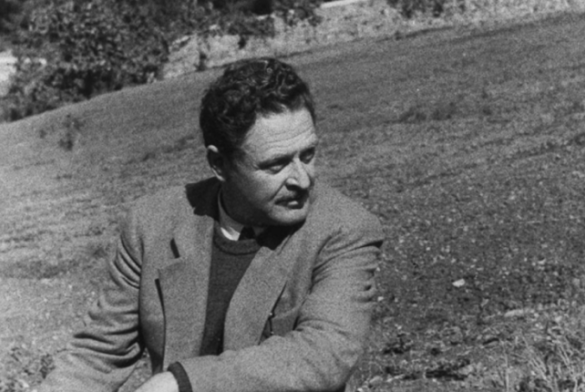
Founded in 2013 to honor the memory of Nâzım Hikmet, establish an archive and information center, make his works and multifaceted identity accessible to the public, and evaluate his contributions to Turkish literature, art, and cultural policies from multiple perspectives, Boğaziçi University’s Nâzım Hikmet Culture and Art Research Center has launched its new project, www.naziminhikayesi.com, on April 16.
The project was conceptualized and written by Murat Gülsoy and Zeynep Uysal. Design and implementation were carried out by Buket Okucu Özbay, sound design by Göksenin Göksel, and video production and editing by a team consisting of Şura Aydın, Hilal Işık, Sarp Şenesen, and Kaan Ünal.
The website brings to light the most critical moments from Nâzım Hikmet’s life through important documents and information. It also features informative videos about key periods of his life, featuring experts such as Zafer Toprak, Olcay Akyıldız, Saime Göksu, Edward Timms, Veysel Öztürk, and Erkan Irmak.
Structured around six main sections, “The Story of Nâzım” begins with “Beginnings,” which covers the years 1902–1920, including his childhood, youth, and first poems. This section presents a detailed family history through personal documents such as his early photographs and birth records.
The “Free Nâzım” section focuses on the years of the Istanbul occupation, his early poems written in syllabic meter, the National Struggle beginning with Mustafa Kemal’s landing in Samsun, Nâzım Hikmet’s journey to Anatolia to join the resistance at age 19, his encounter with Mustafa Kemal in the Grand National Assembly, his appointment as a teacher in Bolu, his turn toward communism, his first marriage, and his departure for Moscow—illustrated with documents and videos.
His years in the Soviet Union and his engagement with Constructivism are explored in the section titled “Smashing the Idols.” During this period, Nâzım wrote anonymously for Resimli Ay magazine and launched the “Smashing the Idols” campaign as an act of rebellion against the entrenched literary canon. The section also highlights his rise to fame between 1929 and 1931 through his published poetry collections, his passionate relationship with Piraye, expulsion from the Communist Party, artistic work in theater and literature in the early 1930s, friendship with Muhsin Ertuğrul, first imprisonment in 1933, and publication of The Epic of Sheikh Bedreddin in 1936—his last book released in Turkey during his lifetime and the first of his mature period.
The section “Nâzım Hikmet’s Prison Years” begins with his time in Ankara and Çankırı prisons, focusing especially on his long imprisonment in Bursa. His friendships with Orhan Kemal, İbrahim Balaban, and Kemal Tahir are among the highlights. The writing process of Human Landscapes from My Country and the changes he made to The Epic of the Independence War are discussed in a video featuring scholar Erkan Irmak.
The 1950 hunger strike that Nâzım began is presented through documents and press clippings, illustrating its resonance in Turkey and around the world. In this section, Zafer Toprak discusses the significance of the hunger strike in Turkey’s intellectual history.
The “Poet of the World” section narrates his years after release from prison—his life under strict surveillance, receipt of the International Peace Prize from the World Peace Council in 1950, escape abroad in 1951 due to increasing pressure, loss of citizenship, and his participation in peace events around the world during the final decade of his life.
Finally, “Nâzım in Turkey” presents the long process of republishing his works in Turkey—beginning in 1965, two years after his death—and the eventual restoration of his citizenship in 2009 by a Cabinet decision, marking a symbolic closure to his complex relationship with his homeland.
